
Introduction
Rooftop gardens USA represents a revolutionary movement transforming underutilized urban spaces into productive, sustainable ecosystems that address food security, environmental challenges, and community wellness across American cities. These elevated growing spaces maximize urban land use while providing fresh produce, educational opportunities, and environmental benefits that enhance quality of life for millions of Americans.
The rooftop gardening movement has gained tremendous momentum throughout the United States, with installations ranging from small residential herb gardens to large-scale commercial farming operations that supply local restaurants and markets. Major metropolitan areas including New York City, Chicago, San Francisco, and Boston have emerged as leaders in rooftop agriculture, demonstrating the viability and scalability of these innovative growing systems.
Modern rooftop garden technology incorporates advanced growing media, efficient irrigation systems, and climate-controlled environments that enable year-round food production in challenging urban conditions. These sophisticated systems address traditional limitations of rooftop growing including weight restrictions, wind exposure, and extreme temperature fluctuations while maximizing productivity and minimizing maintenance requirements.
The economic potential of rooftop gardens continues to expand as technology costs decrease and market demand for locally grown produce increases. Urban farmers, building owners, and communities are discovering multiple revenue streams through direct sales, community-supported agriculture programs, and educational services that make rooftop gardens financially sustainable enterprises.
This comprehensive guide explores the current landscape of rooftop gardens in the USA, examining successful implementations, emerging technologies, policy developments, and future opportunities that position rooftop agriculture as a cornerstone of urban sustainability and food security strategies throughout America.
1. The Rise of Urban Rooftop Agriculture in America
The development of rooftop gardens USA has evolved from grassroots community initiatives to sophisticated commercial operations that contribute significantly to local food systems across American cities. This transformation reflects growing awareness of food security challenges, environmental sustainability concerns, and the economic potential of urban agriculture in maximizing underutilized urban spaces.
Key Drivers of Rooftop Garden Growth:
- Increasing demand for locally sourced, fresh produce in urban markets
- Rising real estate costs making ground-level farming economically challenging
- Environmental benefits including stormwater management and air quality improvement
- Community development opportunities through educational and social programs
- Technology advancement making rooftop growing more efficient and profitable
- Policy support through zoning changes and incentive programs
Major American cities have embraced rooftop agriculture as a solution to multiple urban challenges, with New York City leading the nation in both the number and scale of rooftop garden installations. The city’s comprehensive urban agriculture plan includes support for commercial rooftop farms, community gardens, and educational programs that demonstrate the potential for urban food production.
Chicago’s rooftop garden initiatives focus on community development and food access, with numerous installations in underserved neighborhoods providing fresh produce and educational opportunities. The city’s Green Healthy Neighborhoods program specifically supports rooftop gardens as tools for community empowerment and environmental justice.
West Coast cities including San Francisco, Portland, and Seattle have pioneered innovative approaches to rooftop agriculture that integrate sustainable technology, renewable energy systems, and water conservation practices. These installations serve as models for climate-adaptive urban farming that addresses regional environmental challenges.
The economic impact of rooftop gardens extends beyond food production to include job creation, property value enhancement, and tourism revenue. Studies indicate that buildings with productive rooftop gardens command premium rents and attract environmentally conscious tenants and customers.
2. Types and Design Approaches for American Rooftop Gardens
Rooftop gardens USA encompasses diverse design approaches and growing systems that address varying objectives, climate conditions, and structural limitations. Understanding these different approaches helps property owners, urban farmers, and community organizations select optimal solutions for specific sites and goals.
Primary Rooftop Garden Categories:
- Container-based systems offering flexibility and weight distribution
- Raised bed installations providing deeper growing media for diverse crops
- Hydroponic and aquaponic systems maximizing productivity in limited space
- Intensive soil-based gardens supporting perennial crops and fruit trees
- Modular systems enabling easy installation and reconfiguration
- Greenhouse structures extending growing seasons and crop diversity
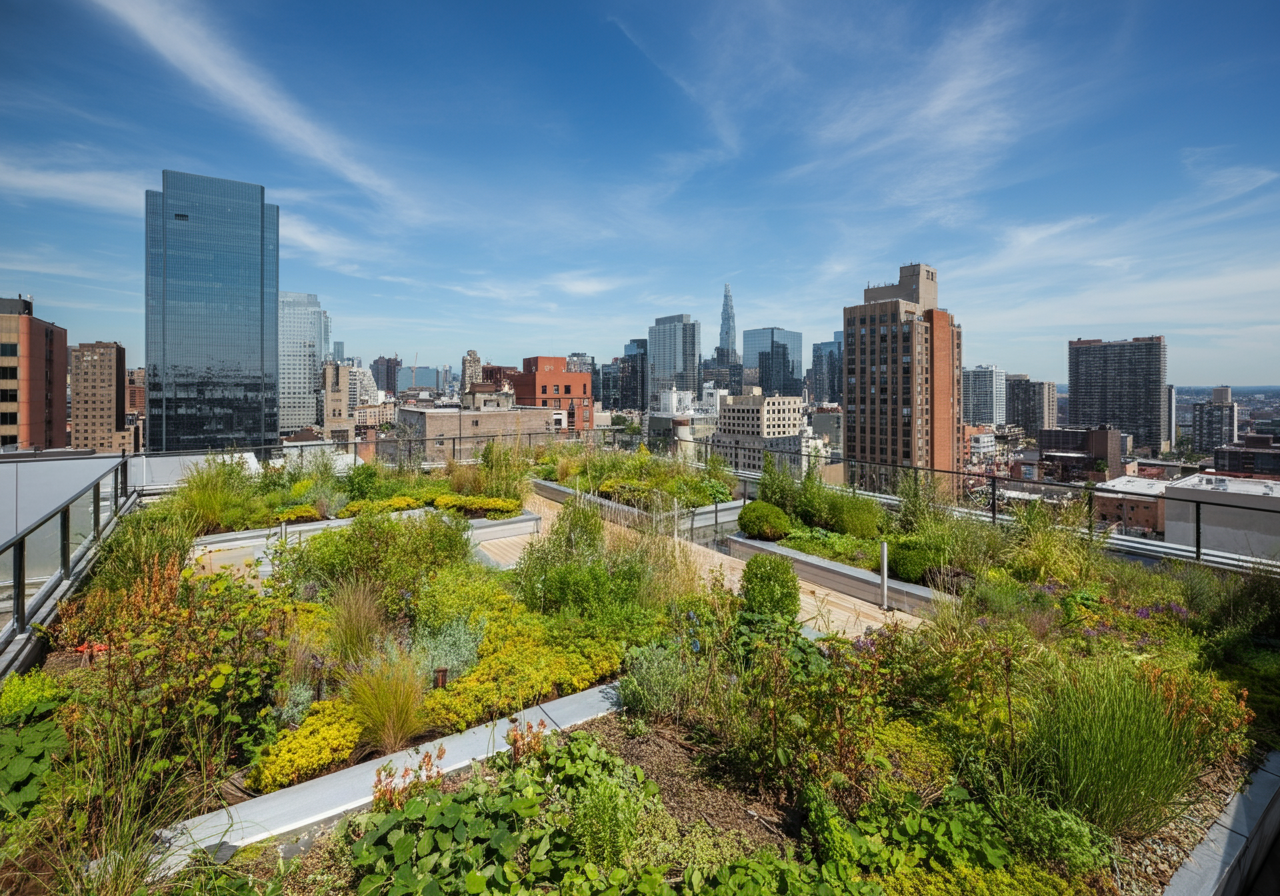
Container-based rooftop gardens represent the most accessible entry point for urban growers, utilizing lightweight containers, grow bags, and modular planters that distribute weight evenly across rooftop surfaces. These systems work well for herbs, leafy greens, and compact vegetables while requiring minimal structural modifications to existing buildings.
Raised bed systems provide greater growing depth and soil volume for root vegetables, larger plants, and perennial crops including fruit trees and berry bushes. These installations require careful structural analysis but offer maximum productivity and crop diversity for serious urban farming operations.
Hydroponic rooftop systems maximize space efficiency and water conservation while enabling precise nutrient management and faster growth rates. These soil-less growing methods work particularly well in urban environments where soil quality and weight limitations present challenges for traditional growing approaches.
Greenhouse and hoop house structures extend growing seasons and protect crops from extreme weather conditions, enabling year-round production in northern climates. These controlled environment systems support higher-value crops and provide consistent harvests regardless of seasonal weather patterns.
Integrated design approaches combine multiple growing systems with renewable energy, rainwater harvesting, and composting facilities to create comprehensive urban farming operations that maximize resource efficiency and environmental benefits.
3. Leading Cities and Success Stories in Rooftop Gardening
American cities have pioneered innovative approaches to rooftop gardening that demonstrate the scalability, profitability, and community benefits of urban agriculture. These success stories provide valuable models for municipalities, developers, and entrepreneurs considering rooftop garden investments.
Top Rooftop Garden Cities in America:
- New York City with Brooklyn Grange and other large-scale commercial farms
- Chicago leading community-based rooftop garden development
- San Francisco integrating rooftop gardens with sustainable building practices
- Boston supporting educational and institutional rooftop installations
- Detroit utilizing rooftop gardens for urban revitalization efforts
- Los Angeles developing climate-adaptive rooftop growing systems
Brooklyn Grange operates the world’s largest rooftop soil farm network, with installations across New York City producing over 80,000 pounds of organic vegetables annually. Their success demonstrates the commercial viability of large-scale rooftop agriculture while providing educational programs, event hosting, and community engagement services that diversify revenue streams.
Chicago’s Gary Comer Youth Center features a 8,000-square-foot rooftop garden that serves as an educational facility and community resource, providing fresh produce for the neighborhood while teaching urban agriculture skills to local youth. This installation exemplifies the community development potential of rooftop gardens in underserved areas.
San Francisco’s rooftop garden initiatives focus on integration with green building practices, with installations at major hotels, restaurants, and corporate facilities that supply fresh ingredients while reducing environmental impact. The city’s supportive zoning policies and incentive programs have encouraged widespread adoption across diverse building types.
Boston’s rooftop gardens emphasize institutional partnerships, with installations at hospitals, schools, and universities that provide fresh produce for food service operations while supporting research and educational programs. These partnerships demonstrate sustainable funding models for ongoing rooftop garden operations.
Detroit’s rooftop gardens contribute to broader urban revitalization efforts, transforming vacant and underutilized buildings into productive spaces that provide food access and economic opportunities in neighborhoods affected by urban decline.
4. Technology and Innovation in American Rooftop Gardens
Rooftop gardens USA benefits from continuous technological innovation that addresses traditional challenges of urban growing while improving productivity, efficiency, and profitability. These technological advances make rooftop gardening more accessible and successful for diverse applications and skill levels.
Key Technological Innovations:
- Automated irrigation systems with soil moisture sensors and weather integration
- Lightweight growing media engineered for rooftop conditions
- Wind protection systems designed for exposed rooftop environments
- Smart monitoring systems tracking plant health and environmental conditions
- Renewable energy integration powering pumps, lights, and climate control
- Mobile applications supporting garden management and harvest tracking
Automated irrigation technology has revolutionized rooftop garden management by providing precise water delivery based on plant needs, weather conditions, and soil moisture levels. These systems reduce labor requirements while optimizing water use efficiency, particularly important in drought-prone regions and water-conscious urban areas.
Lightweight growing media specifically formulated for rooftop applications provides optimal plant nutrition while minimizing structural load requirements. These engineered soils incorporate recycled materials, moisture-retention additives, and slow-release fertilizers that reduce maintenance needs and improve plant performance.
Wind protection systems including screens, barriers, and strategic plant placement address one of the primary challenges of rooftop growing. These solutions create microclimates that protect sensitive crops while maintaining air circulation necessary for plant health and pollination.
Smart monitoring technology enables remote garden management through sensors that track temperature, humidity, soil conditions, and plant health indicators. These systems provide alerts for irrigation needs, pest problems, and harvest timing while collecting data that improves long-term garden productivity.
Solar power integration provides sustainable energy for rooftop garden operations including pumps, lighting, and climate control systems. These renewable energy systems reduce operational costs while demonstrating the compatibility of food production with clean energy generation.
5. Economic Benefits and Business Models
The economic landscape for rooftop gardens USA has matured significantly, with diverse business models and revenue streams making these installations financially viable for commercial operators, building owners, and community organizations. Understanding these economic factors helps stakeholders develop sustainable rooftop garden enterprises.
Revenue Streams and Business Models:
- Direct sales to restaurants, markets, and consumers
- Community-supported agriculture (CSA) programs with subscription members
- Educational workshops and corporate team-building events
- Event hosting including weddings, parties, and corporate functions
- Consulting services for rooftop garden design and installation
- Grant funding and sponsorship opportunities for community-focused projects
Commercial rooftop farms generate revenue primarily through direct sales of fresh produce to high-end restaurants, farmers markets, and grocery stores that value locally grown, pesticide-free vegetables. Premium pricing for ultra-fresh, locally grown produce can make rooftop farming profitable despite higher production costs compared to rural agriculture.
Community-supported agriculture programs provide stable revenue through advance payments from members who receive weekly shares of the harvest throughout the growing season. This model works particularly well for community-based rooftop gardens that emphasize education and social engagement alongside food production.
Educational services including workshops, school programs, and corporate team-building events provide significant revenue opportunities while advancing the mission of urban agriculture education. Many successful rooftop gardens generate 30-50% of their revenue from educational and event hosting services.
Property value enhancement represents an important economic benefit for building owners, with rooftop gardens increasing rental rates, occupancy levels, and property values while reducing energy costs through building insulation and cooling effects.
Cost savings through reduced food purchasing, stormwater management benefits, and energy efficiency improvements provide ongoing economic returns that improve the overall financial performance of rooftop garden investments.
6. Future Trends and Opportunities in Rooftop Gardening
The future of rooftop gardens USA is shaped by emerging technologies, evolving consumer preferences, and innovative applications that expand the potential benefits and applications of urban agriculture. These developments position rooftop gardening as an increasingly important component of urban food systems and sustainability strategies.
Emerging Trends and Opportunities:
- Vertical farming integration maximizing production in limited space
- Aquaponics systems combining fish farming with vegetable production
- Climate-controlled environments enabling year-round tropical crop production
- Robotic systems automating planting, maintenance, and harvesting operations
- Blockchain technology supporting local food traceability and marketing
- Integration with smart city infrastructure and urban planning initiatives
Vertical farming technology is being integrated with traditional rooftop gardens to maximize production density while minimizing space requirements. These multi-level growing systems can increase yields by 300-500% compared to single-level installations while providing protection from weather extremes.
Aquaponics systems that combine fish farming with vegetable production are gaining popularity in urban rooftop applications, providing dual protein and vegetable harvests while creating closed-loop systems that minimize water use and waste production.
Climate-controlled rooftop greenhouses enable production of high-value crops including tropical fruits, specialty herbs, and out-of-season vegetables that command premium prices in urban markets. These controlled environments also extend growing seasons and provide consistent production regardless of weather conditions.
Robotic automation is beginning to address labor challenges in rooftop farming through systems that can plant seeds, monitor plant health, and harvest crops with minimal human intervention. These technologies will make rooftop farming more scalable and economically competitive with traditional agriculture.
Policy development at municipal, state, and federal levels increasingly supports urban agriculture through zoning modifications, tax incentives, and grant programs that recognize the multiple benefits of rooftop gardens for food security, environmental sustainability, and community development.
Conclusion
Rooftop gardens USA represents a dynamic and rapidly expanding sector of urban agriculture that provides measurable benefits for food security, environmental sustainability, and community development across American cities. The success of pioneering installations and continuous technological innovation have established rooftop gardening as a viable and valuable component of urban infrastructure.
The economic viability of rooftop gardens continues to improve as technology costs decrease, market demand for local produce increases, and diverse revenue streams provide multiple pathways to financial sustainability. Building owners, urban farmers, and communities increasingly recognize rooftop gardens as sound investments that provide multiple benefits over extended operational periods.
Policy support at all levels of government creates favorable conditions for continued growth in rooftop garden adoption, with zoning modifications, incentive programs, and sustainability mandates encouraging widespread implementation across diverse urban contexts.
Future opportunities for rooftop garden expansion include integration with smart city technologies, automation systems, and climate adaptation strategies that will further enhance productivity and sustainability while addressing evolving urban challenges.
The transformation of American cities through rooftop garden implementation demonstrates the potential for urban agriculture to contribute significantly to local food systems while creating more sustainable, resilient, and livable urban environments for current and future generations.
How much does it cost to start a rooftop garden in the United States?
Rooftop garden startup costs in the USA vary widely based on size, system complexity, and location, typically ranging from $15-50 per square foot for basic installations and $50-200 per square foot for sophisticated commercial systems. Small residential rooftop gardens can be established for $2,000-10,000, while large commercial operations may require $100,000-500,000 in initial investment. Costs include structural assessment, growing containers, soil, irrigation systems, plants, and tools. Many cities offer grants and incentives that can reduce startup costs by 20-50%.
Do rooftop gardens require special permits or approvals in American cities?
Most American cities require building permits for rooftop garden installations, particularly for permanent structures, electrical work, or plumbing modifications. Requirements vary significantly by municipality, with some cities offering streamlined permitting for rooftop agriculture while others require full structural engineering review. Many cities have developed specific urban agriculture zoning categories that allow commercial food production on rooftops. Building owners should consult local planning departments early in the design process to understand specific requirements and available incentives.
What are the main challenges of rooftop gardening in the USA?
Primary challenges for rooftop gardens in America include structural weight limitations, extreme weather exposure, wind damage, and higher installation costs compared to ground-level gardens. Water access and drainage can be problematic, while extreme temperatures and UV exposure stress plants and growing systems. Maintenance access and safety considerations add complexity and cost to rooftop installations. However, modern technology and design approaches have developed effective solutions for most of these challenges, making rooftop gardening increasingly viable across diverse urban conditions.
Which American cities offer the best support for rooftop gardens?
Leading cities for rooftop garden support include New York City with comprehensive urban agriculture policies and tax incentives, San Francisco offering expedited permitting and grants, Chicago providing zoning flexibility and community development funding, Boston supporting institutional partnerships and educational programs, and Portland with streamlined regulations and sustainability incentives. Many cities also offer reduced stormwater fees for green infrastructure installations, technical assistance programs, and connections to funding opportunities through economic development and environmental departments.
Sources/References
- American Community Gardening Association – Urban Agriculture Resources https://www.communitygarden.org/
- USDA National Institute of Food and Agriculture – Urban Agriculture https://nifa.usda.gov/grants/programs/sustainable-agriculture-research-education-sare-program
- Brooklyn Grange – Commercial Rooftop Farming Case Study https://www.brooklyngrangefarm.com/
- NYC Department of City Planning – Urban Agriculture Guidelines https://www1.nyc.gov/site/planning/zoning/districts-tools/urban-agriculture.page
- National Gardening Association – Food Gardening in the U.S. https://gardenresearch.com/
- Urban Agriculture Association – Best Practices and Resources https://www.urbanag.org/
- Green City Growers – Rooftop Garden Design and Installation https://greencitygrowers.com/
- American Society for Horticultural Science – Urban Horticulture Research https://ashs.org/