
Green roofs America represents a revolutionary approach to sustainable urban development that transforms traditional building practices through innovative rooftop ecosystems. These living architectural systems provide environmental, economic, and social benefits that address critical urban challenges including stormwater management, energy efficiency, air quality improvement, and urban heat island reduction across American cities.
The green roof movement in America has gained significant momentum over the past two decades, with major cities implementing policies and incentives that encourage widespread adoption of these sustainable building systems. From New York City’s comprehensive green roof initiatives to Chicago’s pioneering urban agriculture programs, American cities are leading global efforts to integrate nature into urban infrastructure.
Modern green roof technology offers sophisticated solutions that go far beyond simple rooftop gardens, incorporating advanced drainage systems, lightweight growing media, and carefully selected plant communities that thrive in challenging rooftop environments. These engineered ecosystems provide measurable benefits including reduced energy consumption, improved stormwater management, enhanced biodiversity, and increased property values.
The economic case for green roofs continues to strengthen as technology advances and installation costs decrease, while government incentives and building code modifications make these systems increasingly attractive for developers, building owners, and municipalities seeking sustainable infrastructure solutions.
This comprehensive guide explores the current state of green roofs in America, examining successful implementations, emerging technologies, policy developments, and future opportunities that position green roofing as a cornerstone of sustainable urban development throughout the United States.
1. The Evolution of Green Roofs in American Cities
The development of green roofs America has evolved from experimental installations to mainstream building practices that are reshaping urban landscapes across the nation. This transformation reflects growing awareness of environmental challenges and the need for sustainable infrastructure solutions that address climate change, urbanization pressures, and resource conservation requirements.
Key Milestones in American Green Roof Development:
- Early adoption in major metropolitan areas during the 1990s
- Policy development and incentive programs in leading cities
- Technology advancement and standardization of installation practices
- Integration with LEED certification and sustainable building standards
- Expansion from commercial to residential and institutional applications
- Development of regional plant communities and climate-specific solutions
Major American cities have emerged as global leaders in green roof implementation, with New York City’s mandate requiring green roofs on new construction and Chicago’s comprehensive urban sustainability programs serving as models for municipalities worldwide. These pioneering efforts demonstrate the scalability and effectiveness of green roof systems in diverse urban environments.
The economic drivers supporting green roof adoption have strengthened considerably, with demonstrated returns on investment through energy savings, stormwater management benefits, and increased property values. Federal and state tax incentives, combined with municipal rebate programs, have made green roofs financially attractive for building owners and developers.
Technology advancement has addressed early concerns about structural requirements, maintenance complexity, and plant survival rates, with modern systems offering reliable performance and reduced maintenance requirements compared to traditional roofing systems.
Regional adaptation has become increasingly sophisticated, with green roof designs tailored to specific climate zones, local plant communities, and regional environmental challenges. This localization ensures optimal performance while supporting native ecosystems and reducing maintenance requirements.
2. Environmental Benefits of Green Roofs Across America
Green roofs America provides substantial environmental benefits that address critical urban sustainability challenges while creating measurable improvements in air quality, water management, and energy efficiency. These living systems function as urban ecosystems that support biodiversity while mitigating the environmental impacts of dense urban development.
Primary Environmental Advantages:
- Stormwater management through rainfall absorption and retention
- Urban heat island reduction through evapotranspiration and shading
- Air quality improvement through pollutant filtration and oxygen production
- Energy efficiency enhancement through natural insulation properties
- Biodiversity support through habitat creation for urban wildlife
- Carbon sequestration contributing to climate change mitigation
Stormwater management represents one of the most significant benefits of green roofs in American cities, where aging infrastructure struggles to handle increasing rainfall intensity and urban runoff. Green roofs can retain 40-80% of annual rainfall, reducing peak flow rates and decreasing the burden on municipal stormwater systems while improving water quality through natural filtration processes.
Urban heat island reduction occurs through the natural cooling effects of vegetation and evapotranspiration, with green roofs reducing surface temperatures by 30-80°F compared to conventional roofing materials. This cooling effect extends beyond individual buildings to influence neighborhood-scale temperature patterns, particularly beneficial in dense urban areas.
Air quality improvements result from the natural air filtration capabilities of vegetation, with green roofs removing particulate matter, nitrogen oxides, and other pollutants from urban air while producing oxygen. Studies in major American cities demonstrate measurable air quality improvements in areas with concentrated green roof installations.
Energy efficiency benefits include reduced heating and cooling costs through enhanced insulation properties, with green roofs providing R-values significantly higher than conventional roofing systems. Building owners report energy savings of 15-30% annually, with greater savings in extreme climate conditions.
3. Leading Green Roof Cities and Success Stories
American cities have pioneered innovative approaches to green roof implementation, creating successful models that demonstrate the practical benefits and scalability of these sustainable infrastructure systems. These urban success stories provide valuable insights for municipalities, developers, and building owners considering green roof investments.
Top Green Roof Cities in America:
- New York City with mandatory green roof requirements and extensive installations
- Chicago leading urban agriculture and green infrastructure initiatives
- Washington D.C. implementing comprehensive stormwater management programs
- Portland pioneering eco-roof technology and policy development
- San Francisco integrating green roofs with renewable energy systems
- Seattle combining green roofs with urban biodiversity conservation
New York City has emerged as America’s green roof capital, with over 1,000 green roof installations covering more than 42 million square feet of rooftop space. The city’s Local Law 92 and Local Law 94 require new construction and major renovations to incorporate green roofs or renewable energy systems, driving widespread adoption across all building types.
Chicago’s green roof program began with City Hall’s demonstration project in 2001 and has expanded to include hundreds of installations throughout the metropolitan area. The city’s focus on urban agriculture and food security has created unique opportunities for productive green roofs that serve community needs while providing environmental benefits.
Washington D.C.’s green roof initiatives focus primarily on stormwater management, with the Department of Energy and Environment providing rebates and technical assistance for green roof installations. The city’s combined sewer overflow reduction goals have made green roofs essential infrastructure investments for municipal sustainability objectives.
Portland’s eco-roof program has supported over 400 installations since 2008, with the city providing financial incentives and streamlined permitting processes. The program’s focus on native plant communities and habitat creation has enhanced urban biodiversity while demonstrating the compatibility of green roofs with regional ecosystems.
4. Types and Technologies of American Green Roof Systems
Green roof technology in America encompasses diverse system types and innovative technologies that address varying performance requirements, climate conditions, and building applications. Understanding these different approaches helps building owners and designers select optimal solutions for specific projects and environmental conditions.
Green Roof System Categories:
- Extensive green roofs with shallow growing media and low maintenance
- Intensive green roofs supporting diverse plant communities and recreational use
- Semi-intensive systems balancing performance with maintenance requirements
- Modular systems offering flexibility and easier installation processes
- Blue-green roofs integrating stormwater retention with vegetation
- Living walls and vertical green systems extending green roof concepts
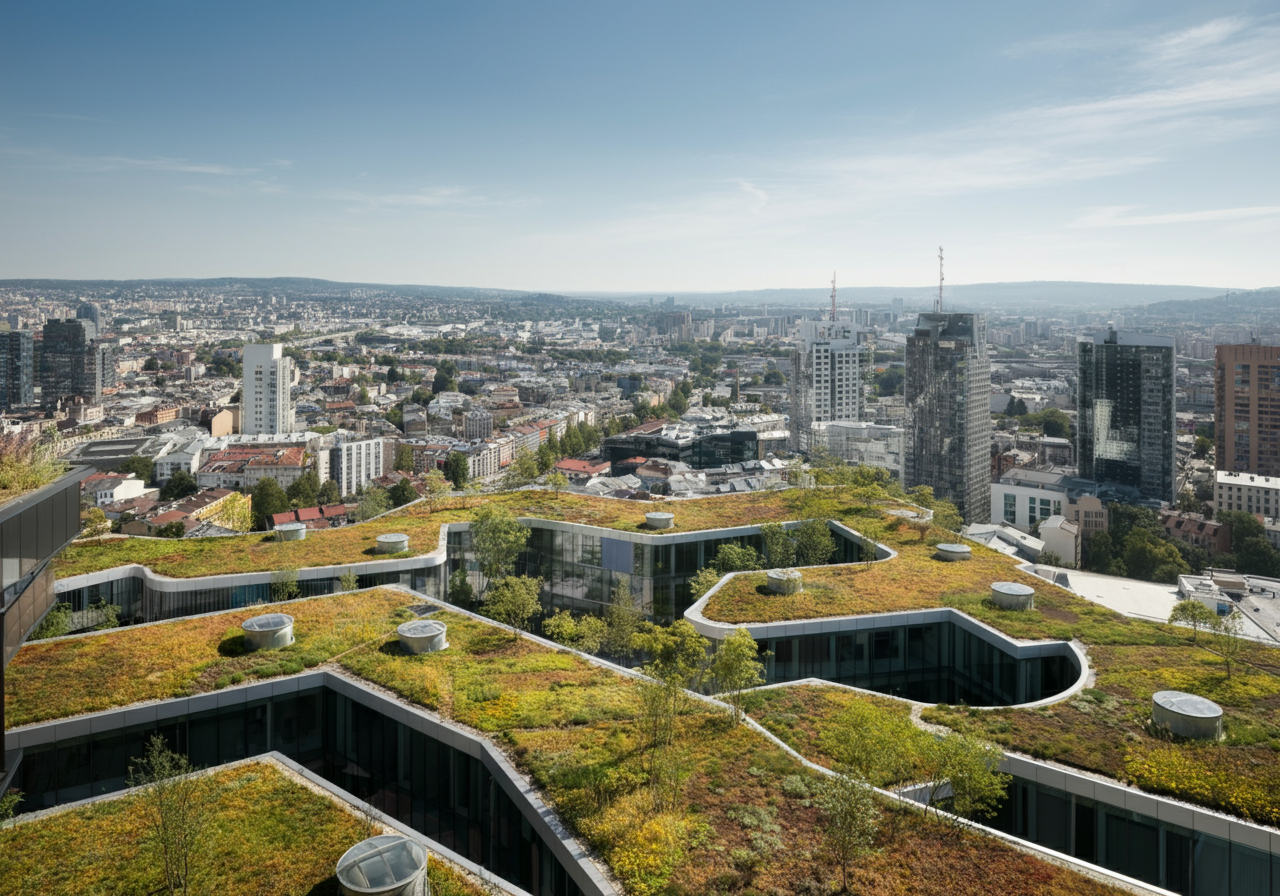
Extensive green roof systems represent the most common installation type in America, featuring 2-6 inches of lightweight growing media supporting drought-tolerant plant communities. These systems provide excellent environmental benefits with minimal maintenance requirements, making them attractive for commercial and institutional applications where ongoing maintenance resources may be limited.
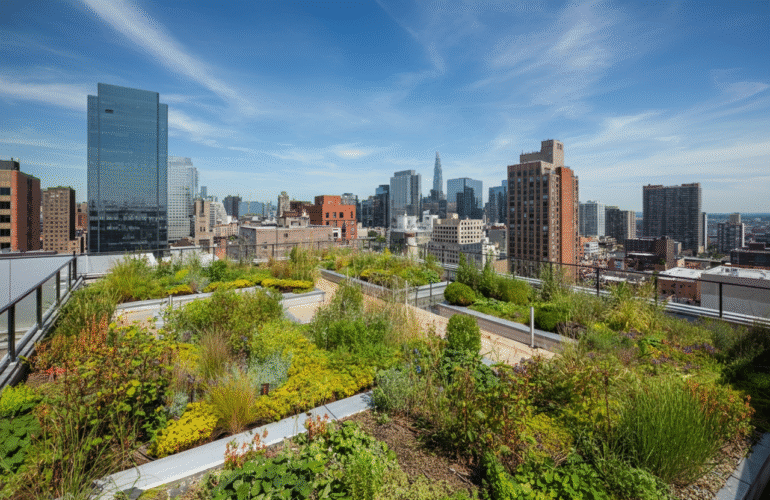
Intensive green roof systems create rooftop parks and gardens with deeper growing media supporting diverse plant communities including trees, shrubs, and recreational spaces. While requiring greater structural support and maintenance investment, these systems provide maximum environmental benefits and can serve as valuable community amenities in dense urban areas.
Modular green roof systems have gained popularity for their installation flexibility and maintenance advantages, with pre-vegetated modules that can be easily installed, replaced, or reconfigured as needed. These systems work particularly well for retrofit applications and buildings with complex rooftop configurations.
Blue-green roof technology combines stormwater retention capabilities with vegetation benefits, incorporating detention areas that temporarily store rainfall while supporting plant growth. These hybrid systems maximize stormwater management benefits while providing the environmental and aesthetic advantages of traditional green roofs.
5. Economic Impact and Financial Incentives
The economic landscape for green roofs America has evolved significantly, with improving cost-benefit ratios and expanding financial incentive programs making these systems increasingly attractive investments. Understanding the economic factors and available incentives helps building owners make informed decisions about green roof implementation.
Economic Benefits and Considerations:
- Energy cost savings through improved building insulation and cooling
- Stormwater management fee reductions in participating municipalities
- Increased property values and marketability for green building features
- Extended roof membrane life through protection from weather extremes
- Potential revenue generation through urban agriculture applications
- Tax credits and rebate programs at federal, state, and local levels
Energy cost savings represent the most predictable economic benefit of green roofs, with documented reductions in heating and cooling expenses ranging from 15-30% annually depending on climate conditions and building characteristics. These savings compound over the system’s 40-60 year lifespan, often exceeding initial installation costs.
Stormwater management benefits provide direct cost savings in municipalities with stormwater utility fees, where green roof installations can qualify for significant rate reductions. Cities like Philadelphia, Portland, and Washington D.C. offer substantial ongoing savings for buildings that reduce stormwater runoff through green infrastructure.
Property value increases have been documented in multiple markets, with green roof buildings commanding premium rents and sale prices compared to conventional buildings. These premiums reflect both the environmental benefits and the marketing advantages of sustainable building features in competitive real estate markets.
Federal tax incentives include accelerated depreciation for green roof installations and potential qualification for renewable energy tax credits when combined with solar installations. State and local incentive programs vary widely but can provide substantial upfront cost reductions through rebates, grants, and tax credits.
6. Future Trends and Innovations in American Green Roofing
The future of green roofs America is shaped by emerging technologies, evolving policy frameworks, and innovative applications that expand the potential benefits and applications of these sustainable building systems. These developments position green roofs as increasingly important components of urban infrastructure and climate resilience strategies.
Emerging Trends and Technologies:
- Smart green roof systems with integrated sensors and automated management
- Solar-green roof combinations maximizing rooftop productivity
- Vertical farming integration for urban food production
- Climate-adaptive plant communities responding to changing conditions
- Prefabricated systems reducing installation time and costs
- Integration with smart city infrastructure and data networks
Smart green roof technology incorporates sensors, automated irrigation systems, and data analytics to optimize performance while reducing maintenance requirements. These systems can monitor soil moisture, plant health, and environmental conditions while providing real-time performance data to building managers and municipal authorities.
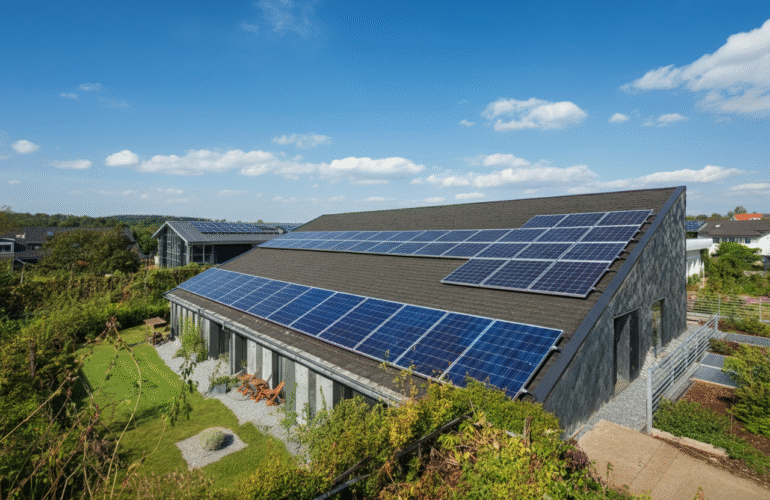
Solar-green roof combinations, known as “biosolar” systems, maximize rooftop productivity by integrating photovoltaic panels with vegetation. These hybrid systems provide renewable energy generation while maintaining the environmental benefits of green roofs, with improved solar panel efficiency due to the cooling effects of vegetation.
Urban agriculture applications are expanding rapidly, with green roofs supporting commercial food production, community gardens, and educational programs. These productive systems address food security concerns while providing economic returns that help offset installation and maintenance costs.
Climate adaptation strategies increasingly incorporate green roofs as essential infrastructure for urban resilience, with plant communities selected for their ability to thrive under changing climate conditions while providing maximum environmental benefits during extreme weather events.
Conclusion
Green roofs America represents a mature and rapidly expanding industry that provides measurable environmental, economic, and social benefits for urban communities across the nation. The success of pioneering cities and the development of sophisticated technologies have established green roofs as essential components of sustainable urban infrastructure.
The economic case for green roofs continues to strengthen as technology advances reduce costs while expanding incentive programs improve financial returns. Building owners, developers, and municipalities increasingly recognize green roofs as sound investments that provide multiple benefits over extended operational lifespans.
Policy development at federal, state, and local levels supports continued growth in green roof adoption, with building codes, incentive programs, and sustainability mandates creating favorable conditions for widespread implementation. These policy frameworks position America as a global leader in green roof technology and application.
Future opportunities for green roof expansion include integration with smart city technologies, combination with renewable energy systems, and adaptation for climate resilience applications. These emerging applications will further enhance the value proposition for green roofs while addressing evolving urban challenges.
The transformation of American cities through green roof implementation demonstrates the potential for sustainable infrastructure to address multiple urban challenges simultaneously while creating more livable, resilient, and environmentally responsible communities for future generations.
How much do green roofs cost in the United States?
Green roof costs in America typically range from $15-25 per square foot for extensive systems and $25-80 per square foot for intensive installations, depending on system complexity, plant selection, and regional factors. These costs include materials, installation, and initial establishment but exclude structural modifications that may be required. Federal, state, and local incentive programs can reduce upfront costs by 20-50%, while long-term energy savings and other benefits provide ongoing economic returns.
Which American cities offer the best green roof incentives?
Leading cities for green roof incentives include New York City with tax abatements and grants, Chicago with rebate programs and streamlined permitting, Washington D.C. with stormwater fee reductions, Portland with eco-roof incentives, and San Francisco with expedited permitting for green buildings. Many cities also offer reduced stormwater utility fees for buildings that manage rainfall onsite through green infrastructure, providing ongoing operational savings.
Do green roofs require special building permits in America?
Green roof installations typically require building permits in most American jurisdictions, with requirements varying by city and system type. Extensive green roofs may qualify for simplified permitting processes, while intensive systems usually require full structural engineering review and landscape architecture plans. Many cities have developed streamlined permitting processes for green roofs to encourage adoption, and some offer expedited review for projects meeting specific sustainability criteria.
What plants work best for green roofs in different American climate zones?
Plant selection for American green roofs depends on regional climate conditions, with drought-tolerant sedums and grasses common in arid western regions, native wildflowers and perennials popular in temperate zones, and heat-tolerant species essential in southern climates. Successful installations typically use regionally appropriate plant communities that require minimal irrigation and maintenance while providing habitat for local wildlife. Many cities have developed approved plant lists specific to their climate conditions and environmental goals.
Sources/References
- Green Roofs for Healthy Cities – North American Green Roof Industry Report https://www.greenroofs.org/
- U.S. Environmental Protection Agency – Green Roofs and Cool Roofs https://www.epa.gov/heatislands/using-green-roofs-reduce-heat-islands
- National Park Service – Technical Preservation Services Green Roofs https://www.nps.gov/tps/sustainability/new-technology/green-roofs/
- American Society of Landscape Architects – Green Roof Resources https://www.asla.org/sustainabledesign/greenroofs.html
- NYC Department of Environmental Protection – Green Infrastructure https://www1.nyc.gov/site/dep/water/green-infrastructure.page
- Chicago Green Roofs – City of Chicago Environment https://www.chicago.gov/city/en/depts/mayor/supp_info/green_roof_progra.html
- Green Building Alliance – Green Roof Benefits and Costs https://www.go-gba.org/resources/green-building-methods/green-roofs/
- Urban Land Institute – Green Roof Development Best Practices https://uli.org/research/centers-initiatives/building-healthy-places-initiative/